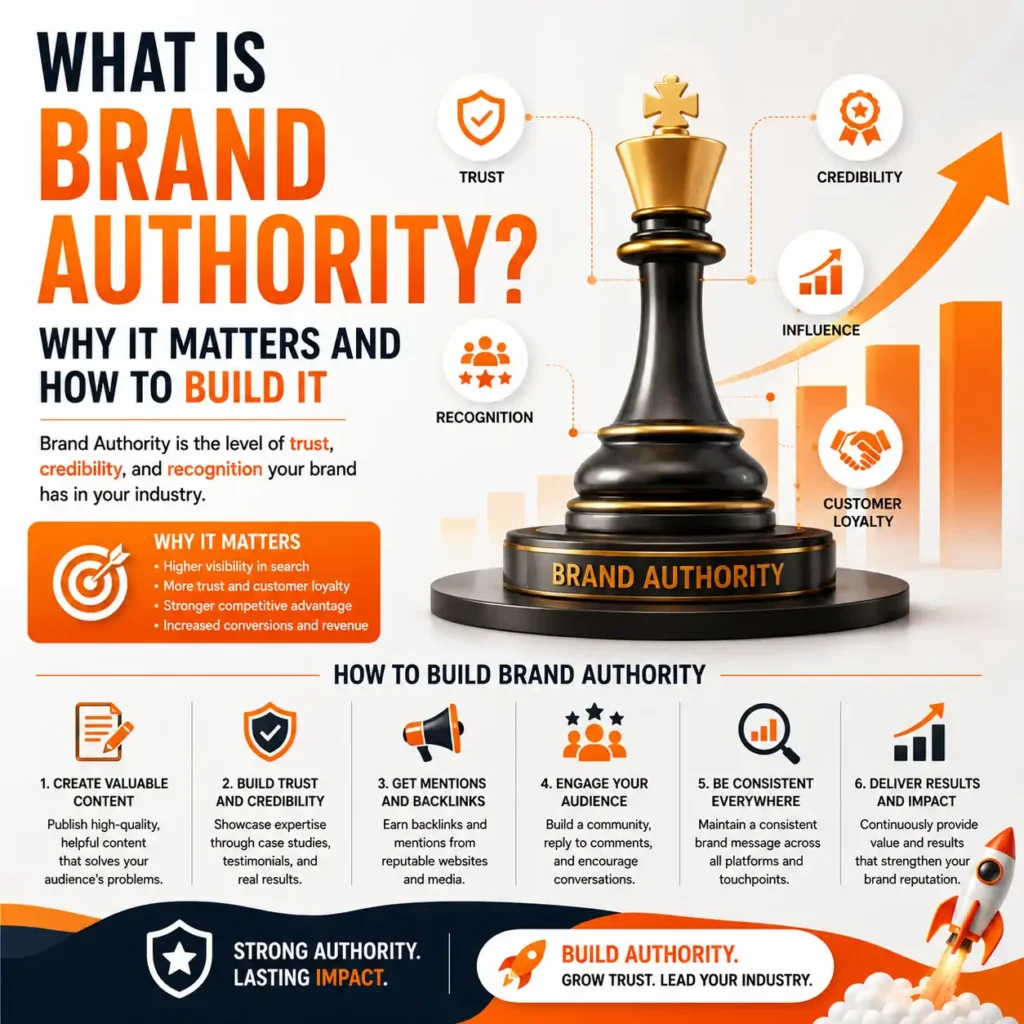
If you have ever wondered why some companies get customers easily while others struggle to be noticed, the answer is usually brand authority. It occurs when people trust and believe in a business because it is recognized as an expert in its field. This means that customers see the business as an option, rather than just another choice.
Building brand authority is not about talking a lot or posting numerous things online. It is about showing customers that you really care about their problems and understand them better than anyone. To do this, you need to have a plan and think about what you’re doing.
Businesses that build brand authority take it seriously. They are clear about what they say to people. They talk to them regularly. They make choices based on what is real, not just what they think will get them attention. It is a part of everything these businesses do, helping them build trust with their customers.
If you want to start building brand authority for your business, here are a few specific actions to try right away:
– Respond to customer questions weekly, whether through email, social media, or comments.
– Share helpful tips or insights in your area of expertise on a regular schedule.
– Ask your audience for feedback and use it to improve what you offer.
The companies that have brand authority ensure that it is an integral part of their work, building trust with their audience, which in turn helps to establish and maintain it.
What Is Brand Authority?
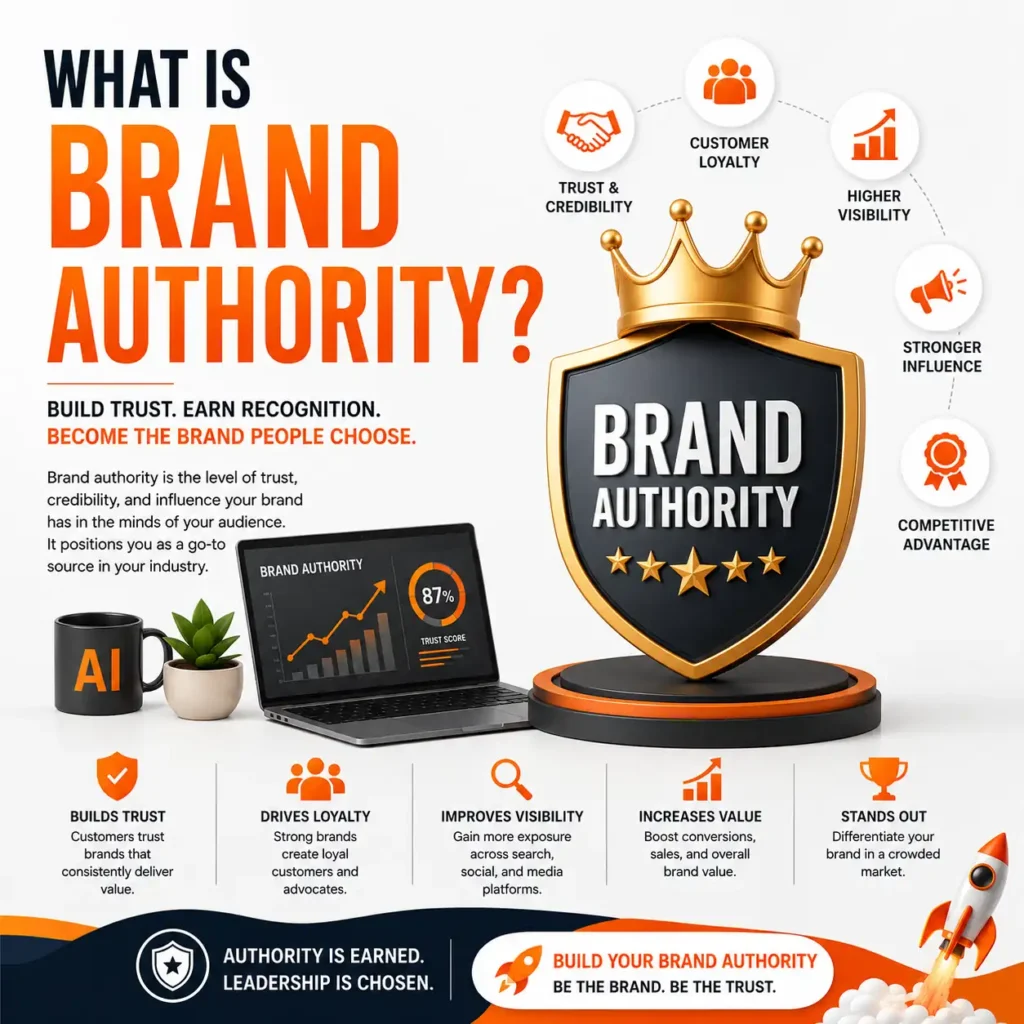
It refers to the sense of expertise, trust, and reliability that a business has established with its target audience. It is earned, not claimed. A business with brand authority does not need to convince people it knows what it is talking about. The audience already believes it, based on a history of helpful, consistent, and honest communication.
This is different from brand awareness. A company can be well known without being trusted as an expert. Brand authority specifically means people turn to you first when they have a question in your area of expertise. They expect your answer to be good.
Why Brand Authority Matters
Trust has become the factor in most buying decisions, especially in busy markets where several companies offer similar services. When a business has authority, a few things start to happen:
- Prospects reach out on their own instead of needing to be convinced through cold outreach.
- Content and recommendations get. Used by others in the industry.
- Price becomes less of an issue because trust has already been built.
- Customers stay longer because the relationship is not about a single transaction.
One marketing expert who focuses on helping businesses build brand authority says it simply: the biggest change she sees in clients isn’t an increase in traffic. It’s when people start reaching out to them as experts instead of just seeing them as another service provider. That change in how people see you is what brand authority is really about.
There is also a growing effect to consider when it comes to brand authority. Once a business is seen as an expert on a topic, it becomes easier for that business to get opportunities that never even show up on search engines. The business will get speaking invitations, partnership requests, press mentions, and referrals from trusted voices, such as industry leaders or satisfied customers who recommend your business to others. None of that comes from the business being seen more. It comes from a history that others are willing to support, which is exactly what brand authority represents for that business.
The Biggest Mistake Businesses Make With Brand Authority
A mistake businesses make with brand authority is mixing up visibility with it. Many businesses think that posting often, following trends, or using a lot of AI-generated content will automatically create trust for that business. It does not. Brand authority comes from sharing original ideas that solve real problems for a specific audience, not from just posting more content for the business.
The second big mistake businesses make with brand authority is not staying consistent with their message. When a business keeps changing its message, target audience, or area of focus, customers get confused about what the business stands for. The brands that build long-term brand authority are the ones with a point of view, consistent value, and claims backed by knowledge and results, for that business.
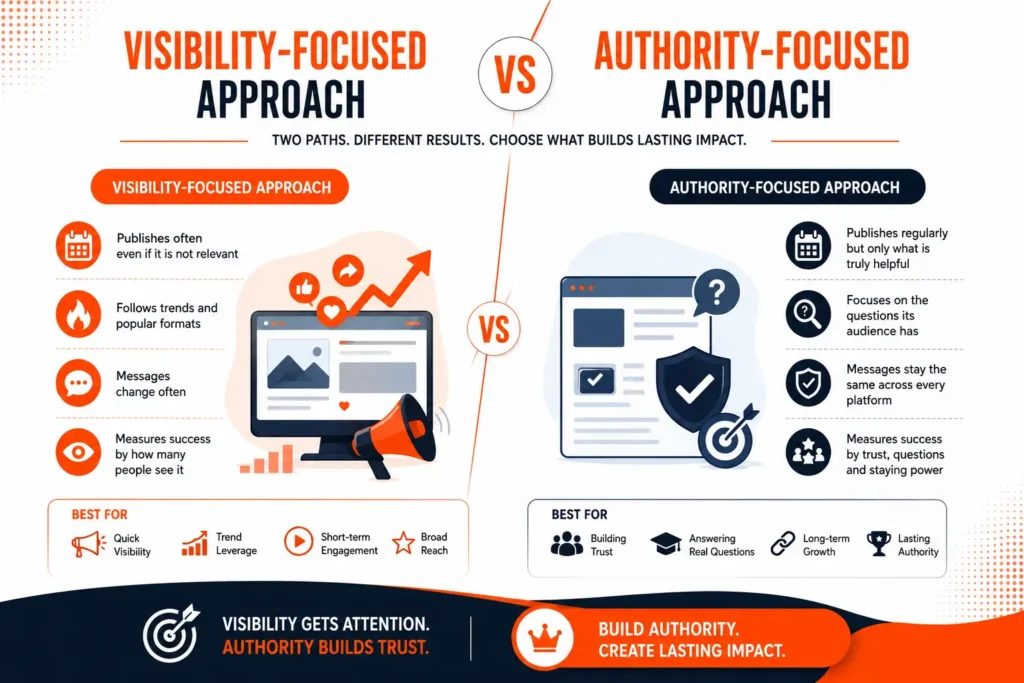
Here is a simple way to see the difference:
Visibility-Focused Approach
Publishes often even if it is not relevant
Follows trends and popular formats Messages change often
Measures success by how many people see it
Authority-Focused Approach
Publishes regularly but only what is truly helpful
Focuses on the questions its audience has
Messages stay the same across every platform
Messages stay the same across every platform
Measures success by trust, questions and staying power
A Simple Framework for Building Brand Authority
There is no way to build brand authority, but there is a reliable plan that works in most areas: positioning, messaging, content, and improvement. Skipping to content before the basics are in place is one of the ways to waste time and money.
1.Start With Positioning
Before making any content, get clear on what makes your business different and why customers should trust it over others. This means understanding your audience, your goals, and the competition enough to find a real gap you can fill. Without this step, everything built afterward is on a base.
2.Create Consistent Messaging
Once positioning is clear, turn it into messages that stay the same across every customer interaction. Your website, media, sales talks, and content. Inconsistent messages are one of the ways to lose trust, even when the knowledge is real.
3.Build a Content Plan Around Real Questions
With positioning and messages set, find the topics that matter most to your audience and plan a content strategy around them. This is where AI tools can help. Making research writing and improving easier… The ideas and views still need to come from real knowledge, not just machines.
4.Track, Learn, and Improve
Finally, watch what is actually working with your audience and adjust the plan based on results, not guesses. Brand authority isn’t built once and left alone; it is maintained through changes based on what your audience likes.
A Real Example: From Expert to Trusted Authority
One example that shows this clearly involves a business with strong knowledge but very little online presence or reputation. Their content was uneven, their message was unclear. They were up against bigger, more trusted brands.
The solution wasn’t content. It was better-targeted content. The work focused on making their positioning, finding the specific topics where they could offer a unique view, and creating a consistent strategy for thought leadership supported by AI-assisted research and content tools. The team focused on quality educational content, improved message consistency across platforms, and made sure everything matched the actual questions their audience had.
Over time, engagement increased, trust was built, and more people reached out. The business started to be seen as a voice in its area. Brand authority rarely appears quickly. The clearest sign of progress was a change in how people came to them. As an expert to ask, not a company to compare on price.
How to Build Brand Authority on a Small Budget
You don’t have to have a group of people or a lot of cash to creating it. You just need focus. Choose one area where your knowledge is genuine, find the most common questions your audience asks, and consistently share content that answers them clearly and helpfully.
Frequency is not as important as many think. One researched article, video, or post each week that really helps your audience will beat frequent generic content every time. AI tools can help with research organization and consistency. Your special point of view is what actually builds trust. That part can’t be automated.
How to Know If Your Brand Authority Is Growing
Because brand authority is about how people see you, it can feel hard to measure. In reality, a few clear signs usually show up before money does:
-More messages come in without ads or outreach.
-Sales talks get shorter because people already trust your knowledge.
-Other people in your field start using your content, quoting it or asking you to join theirs.
-More people search for your business by name or general terms.
-Engagement improves, with thoughtful comments and questions instead of just viewing.
Tracking these signs over time. Than just watching traffic or followers. Gives a much better real picture of whether the plan is working.
Frequently Asked Questions
How long does it take to build brand authority?
It takes time to build , and it depends on the industry you’re in and how often you put out new things and how well you share what you know. Most businesses start to see people trust them and get interested after they have been working hard for months, not just a few days or a few weeks.
Is brand authority the same as brand awareness?
No, it is not the same as brand awareness. Brand awareness means people know your brand name. Brand authority means people trust your brand judgment and come to your brand when they have a question or a problem related to your brand.
Can a small business really compete with brands on brand authority?
Yes, a small business can compete with it . It is often easier for a small business to compete on brand authority than on advertisements or brand awareness. Big brands are often very general, which gives businesses a chance to become the expert on a specific topic or for a specific group of people related to brand authority.
Does AI content hurt brand authority?
It depends on how you use AI content. AI can help you do research faster and make your work easier. Brand authority comes from real ideas and real knowledge. If your content is all AI and no real perspective, it will not help you build trust.
What is the first step if we’re starting from scratch to build brand authority?
First, you need to figure out how you want people to see your brand before you do anything to build brand authority. You need to be clear about what you want people to know about your brand, who you are trying to help with your brand, and why your brand is different from brands related to brand authority. If you skip this step and start making content away from your brand authority, your efforts will probably not work.
Key Takeaways
It is not created by making a lot of stuff, following trends, or trying to be seen for no reason. It is created by giving useful knowledge that builds trust over time. If you are trying to build brand authority for your business, remember these points:
- Focus on being useful before trying to be seen.
- Make sure your positioning and your message are correct before spending a lot of time on content.
- Use a plan: start with positioning, then messaging, then content, and finally improvement.
- Begin with an area. One specific topic, one clear area of knowledge. Instead of trying to do everything at once.
- Let knowledge, not just tools that work automatically, guide the ideas behind your content.
Companies that stick with this way of working don’t just get attention. They get trust… Trust is what really turns people who are interested into customers who stay for a long time.